Liberal Democracy

Liberal Democracy
The Free State

Monday, November 14, 2011

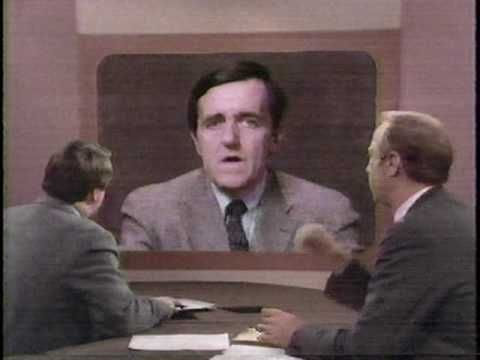
Firing Line With William F. Buckley: 'Are Medical Costs Controllable (1994)?'

Source:Firing Line With William F. Buckley- Dr. Charles Sanders, participating in this Firing Line debate.

"Episode S0999, Recorded on January 26, 1994. Guests: Richard Janeway, J. Ward Kurad, Charles A. Sanders. For more information about this program, see:Hoover Institution." 


"Yes!, is our guests' resounding answer to the title question--and without

unmaking what is generally agreed to be the world's finest health-care system (CS: "One

of the best things about the Canadian system is the proximity to the U.S."). Drs. Sanders

and Janeway emphasize portability (the ability to retain your medical insurance if you

change jobs) and insurance for catastrophic illness--which, says Dr. Janeway, could be

taken care of for "not a huge amount of cost to the American public per year." Dr.

Kurad--who was driven out of active practice of his specialty by "the paperwork mill

and the hassles with insurance and Medicare"--tells persuasively what business can do to

cut the red tape." 

From the Hoover Institution 

In 1994, President Bill Clinton and the Democratic Congress (House and Senate) pushed for health care reform and seeing that every single American has access to quality, affordable health care and health insurance. And two of the areas that they focused on where quality, affordable coverage and controlling medical costs. 

Congressional Republicans, led by Senate Minority Leader Bob Dole and House Minority Leader Bob Michael, strongly opposed the so-called Clinton Care approach to health care reform which would mean more government involvement in the health care system. And this is what the Firing Line debate is essentially about.  

You can also see this post on WordPress

You can also see this post at The Daily Post, on Blogger. (No pun intended) 

You can also see this post at The Daily Post, on WordPress. (No pun intended)

Sunday, November 13, 2011

20th Century Vision: 'PBS MacNeil/Lehrer Report Iowa Caucus 1988'

Source:20th Century Vision- PBS News anchor Jim Lehrer, David Gergen, and Mark Shields, talking about the 1988 Iowa Caucus.

"The Public Broadcasting Service (PBS) is an American public broadcaster and television program distributor.[6] It is a nonprofit organization and the most prominent provider of educational television programming to public television stations in the United States, distributing series such as American Experience, America's Test Kitchen, Antiques Roadshow, Arthur, Barney & Friends, Between the Lions, Clifford the Big Red Dog, Downton Abbey, Finding Your Roots, Frontline, The Magic School Bus, Masterpiece Theater, Mister Rogers' Neighborhood, Nature, Nova, the PBS NewsHour, Reading Rainbow, Sesame Street, Teletubbies, Keeping up Appearances and This Old House." 

From Wikipedia 

"PBS MacNeil/Lehrer Report Iowa Caucus 1988" 


When then Senate Minority Leader Bob Dole was running for President back in 1987-88, he won the Iowa Caucus, beating both Vice President George H. Bush, who was considered the establishment candidate, as well as beating Reverend Pat Robertson who was the Christian-Conservative candidate. That made the 1988 Republican primary race for President a two-candidate field between Minority Leader Dole and Vice President Bush, giving each candidate a target to shoot at. 

Saturday, November 12, 2011

Firing Line With William F. Buckley: U.S. Representative Newt Gingrich- 'Where is The GOP Headed (1984)'


Source:Firing Line With William F. Buckley- U.S. Representative Newt Gingrich (Republican, Georgia) on Firing Line With William F. Buckley, in 1984.

"Episode S0627, Recorded on December 6, 1984

Guests: Newt Gingrich, Bill Green. For more information about this program, see:Hoover Institution." 


"Mr. Gingrich was already a leader of the conservative wing of the GOP, and Mr. Green was prominent among the remnant of "Rockefeller Republicans." Ronald Reagan having just become, barring the repeal of the 22nd Amendment, a lame duck, Mr. Buckley asks his guests to focus on "the future of the Republican Party post Reagan." They do so more in terms of programs and philosophy than of personalities, in a crisp exchange. Mr. Green, for example, defends the Federal Government's public-housing program: when it was begun "fully half of the housing in this country either lacked indoor plumbing or was so run down it was a real threat to the life and health of the people... Now, as we've gotten to the point where the housing in this country is much better, a much better case can be made for something like the housing voucher ..." Mr. Gingrich, on the other hand, sees modern liberalism as still "find[ing] it very hard to believe that average people can do anything for themselves, and so they have a tendency to provide more and more professional help, which somehow doesn't help you." 

From the Hoover Institution 

This photo is from another video of Representative Newt Gingrich’s 1984 appearance on Firing Line With William F. Buckley. But that video where this photo is from is not currently available online right now.

Source:Firing Line With William F. Buckley- U.S. Representative Newt Gingrich (Republican, Georgia) on Firing Line With William F. Buckley, in 1984.
By 1985 the Republican Party was doing as well as it ever had perhaps in the entire 20th Century. With President Reagan just being reelected in a landslide over Walter Mondale in 1984. And Senate Republicans retaining control of the Senate and electing Bob Dole as their Leader. 

And House Republicans while still in the House minority, but with 190 or so seats, giving them a chance to win control of the House in 1986 and make Bob Michael who was the Minority Leader, the next Speaker of the House. 

The Republican Party had Ron Reagan as President, Bob Dole as Senate Leader and Bob Michael as their Leader in the House. With a popular President the Republican Party was probably at their height of power in 1985. 

What this interview with Representative Newt Gingrich in 1984 was about, was where was the Republican Party headed in the next 2-4 years and perhaps after President Ronald Reagan. With Newt Gingrich being one of the Republican visionaries in Congress and the broader Republican Party.  

You can also see this post on WordPress.  

You can also see this post at The Daily Post, on Blogger. (No pun intended) 

You can also see this post at The Daily Post, on WordPress. (No pun intended)
Friday, November 11, 2011

Firing Line: William F. Buckley- Interviewing U.S. Senator Charles Mathias: 'The Role of Liberals in the Republican Party'

Source:Firing Line With William F. Buckley- Interviewing U.S. Senator Charles Mathias (R, Maryland) in 1978.
"Episode S0313, Recorded on March 16, 1978

Guest: Charles McC. (Charles McCurdy) Mathias

For more information about this program, see:Hoover Institution."

From Firing Line With William F. Buckley 

U.S. Senator Charles Mathias (Republican, Maryland) appearing on Firing Line With William F. Buckley in March of 1978. But the video from where this photo came from, is not currently available online right now.

Source:Firing Line- U.S. Senator Charles Mathias: Republican, Maryland: on Firing Line With William F. Buckley in 1977.
"The role of Liberals in the GOP." Originally from Firing Line With William F. Buckley.

Sen. Charles Mathias who was a Republican Senator from the great State of Maryland from 1969-87. And before that a Representative from the great State of Maryland from 1963-69. For a total of twenty-four years in Congress (and yes, I’m familiar Maryland political history) probably should’ve been a Democrat all along.

Which is why Senate Leader Bob Byrd or his deputies in 1978, tried to recruit Senator Mathias to run for reelection as a Democrat in 1980. Because Sen. Mathias supported things like the Panama Canal Treaty in 1978, civil rights in the 1960s and I’m sure several other things and probably voted with President Jimmy Carter as much or more.

Then Senator Mathias voted against President Carter and may have voted against President Reagan as much as he voted with him. Jimmy Carter and Ron Reagan being extremely different politically and both fit in well with their parties.

Senator Mathias was a Liberal Republican (if there is such a thing) from again the great State of Maryland. A very liberal Democratic state where the voter registration is something like 70% Democratic. To get elected as a Republican in the State of Maryland, especially statewide. Senator Mathias had to vote Democratic. Or at least vote with Senate Democrats enough to seem liberal enough to Marylanders to get reelected.

Moderate Republicans or people who I would call classical Conservative Republicans can get elected and reelected in the Republican Party. Because they vote republican on economic policy. 

You can also see this post on WordPress

You can also see this post at The Daily Post, on Blogger. (No pun intended) 

You can also see this post at The Daily Post, on WordPress. (No pun intended)

Thursday, November 10, 2011

World Ahead Publishing: Kasey S. Pipes- 'Dwight Eisenhower, Not Lyndon Johnson, Was First Civil Rights Champ'


Source:World Ahead Publishing- Little Rock, Arkansas, is literally one of the first battles of the American civil rights movement.

"Kasey Pipes, author of "Ike's Final Battle: The Road to Little Rock and the Challenge of Equality," describes how Republican Dwight D. Eisenhower -- not LBJ, as liberals often claim -- was America's first civil rights president." 


Dwight Eisenhower was the first American civil rights President, at least post-Abraham Lincoln. The only thing I would add to that is that he didn’t run for President to be that, but it sort of hit his desk with the school segregation issues that hit the American South in the 1950s with President Eisenhower believing he needed to act on that.

Source:Dwight Eisenhower Presidential Library- President Dwight D. Eisenhower (Republican, Kansas) meeting with Dr. Martin L. King and other American civil rights leaders, probably in the 1950s.

Dwight Eisenhower, was not the first President to come out in favor of civil rights or human rights for everyone in America. Abraham Lincoln deserves the credit for that for the Civil War that ended slavery and freed the African slaves. And Harry Truman allowed soldiers of different races to serve together with an executive order in I believe in 1945. 

What President Dwight Eisenhower deserves credit for and I believe its accurately reported in his presidential legacy, was enforcing rule of law in America for all the people. Rule of law as a Progressive Republican, is something that Dwight Eisenhower believed in deeply and I believe he picked that up in the military. If Rule of law is not properly enforced, then rules and laws become meaningless.

Ike Eisenhower, saw his job as President to enforce rule of law. Something he did very well as President, with enforcing all of those U.S. Supreme Court decisions that allowed students of different races to go to school together and sending the Army into Little Rock, Arkansas to make sure the Governor of Arkansas allowed those African-American students go to school with the Caucasian- American students there at Central High School in Little Rock. 

And these types of decisions not just enforcing laws that you agree with, but enforcing all laws which is what rule of law is about, would not play well today with the Far-Right of the Republican Party. Which is one reason why I believe Ike Eisenhower wouldn’t be able to get the Republican nomination for president today, because he was a Center-Right, Progressive Republican, who not only believe in the Constitution, but equal rights and constitutional rights for all Americans. 

You can also see this post on WordPress.  

You can also see this post at The Daily Post, on Blogger. (No pun intended) 

You can also see this post at The Daily Post, on WordPress. (No pun intended)

Monday, November 7, 2011

Firing Line With William F. Buckley: 'Two Friends Talk: Ronald Reagan and William F. Buckley Jr'

Source:Firing Line With William F. Buckley- President Ronald W. Reagan (Republican, California) on Firing Line With William F. Buckley in 1990. 

"Episode S0873, Recorded on October 11, 1990. Guest: Ronald Reagan. For more information about this program, see:Hoover Institution." 


"There are no fireworks at this meeting of two old friends, but there is broad and deep discussion of the world and how Mr. Reagan may have changed it. WFB: "Conceivably, might there be USSR-American cooperation in developing SDI?" RR: "Well... I have told [Gorbachev] that I would advocate making that information open to the world ... in return for all of us destroying our nuclear weapons. But I said the reason for having it is- I used the example of World War I. I said all the nations of World War I met and outlawed poison gas, but we all kept our gats masks. I said, Who can say that down the way somewhere there won't be another Hitler, there won't be another madman that could use the knowledge of how to make weapons and blackmail the earth?" 

From the Hoover Institution 

“Two Friends Talk: Reagan and Buckley”


Source:Guy John- “2/7/1986 President Reagan with William F Buckley in the White House Residence during Private birthday party in honor of President Reagan’s 75th Birthday”
From Guy John 

“William F. Buckley was a public intellectual, commentator, and founder of National Review, the magazine that arguably launched the modern conservative movement as we know it today. Would there even be a conservative movement without Buckley’s leadership?

And if so, is he responsible for the Trumpist turn Republican Party has taken? Does Buckley bear some blame for the direction in which conservatism has developed?” 

From the Niskanen Center

It’s good to see Ron Reagan together with Bill Buckley. As far as I’m concern two of the fathers of the modern classical conservative movement. Who both had a role in making that movement national starting in the mid 1960s. With Barry Goldwater’s 1964 presidential campaign that went a long way in putting classical conservatism on the map in American politics, because of the states that Senator Goldwater was able to reached. Winning Southern states that up until 1964, the Democratic Party had owned and Senator Goldwater was able to win a few of them. And of course Richard Nixon was able to win a lot of Southern states in 1968 as he was elected president. 

You can also see this post on WordPress.  

You can also see this post at The Daily Post, on Blogger. (No pun intended) 

You can also see this post at The Daily Post, on WordPress. (No pun intended)

Sunday, November 6, 2011

Reagan Foundation: 'State of the Union: President Reagan's State of the Union Speech - 1/26/82'

Source:Reagan Foundation- President Ronald W. Reagan (Republican, California) giving the 1982 State of the Union address.

"President Reagan's State of the Union Speech - 1/26/82. For more information on the ongoing works of President Reagan's Foundation, visit us at:Reagan Foundation ." 

From the Reagan Foundation 

This photo is from the 1982 State of the Union speech that President Reagan delivered to that joint session of Congress, with Vice President George H.W. Bush (Republican, Texas) and Speaker of the House Thomas P. O'Neal (Democrat, Massachusetts) behind the President. But the video that this photo is from is not currently available online right now. 

Source:Reagan Foundation- President Ronald W. Reagan (Republican, California) giving the 1982 State of the Union address.
If you listen to President Reagan’s 1982 State of the Union Speech and then listen to President Obama’s 2009, or 2010 State of the Union speeches, they are similar at least in this sense: "Times are tough, we passed a program to deal with the bad economy. Things are improving a little bit and had we not passed our program, things would be worse had we not done anything.” Same thing was said in 1982 from President Reagan and President Obama said the same thing in 2010. Because the situation was similar, an awful recession and high unemployment in both cases.

The country probably wasn’t buying either speech that much, because President Reagan’s Republican Party dropped thirty plus seats in the House in 1982. And I don’t know how they managed hang on to the Senate. (Maybe that’s a future post) And President Obama’s Democratic Party dropped sixty-two seats in the House in 2010. 

Both Presidents inherited awful economy’s big reason why they were elected President. The economy’s so bad that it wasn’t until late 1983, that the economy began to take off again. With high economic growth and a falling unemployment rate. A big reason why President Reagan was reelected in a landslide.  

You can also see this post on WordPress