Liberal Democracy

Liberal Democracy
The Free State
Showing posts with label Richard Nixon. Show all posts

Thursday, March 29, 2018

CNN: Race For The White House: Richard Nixon vs John Kennedy (1960)

Source: CNN- The 1960 Democratic National Convention. 
Source:The New Democrat 

"CNN Race for the White House 1of6 Nixon vs JFK" 

1960 between Richard Nixon and John Kennedy, was one of the last presidential elections in America that was about ideas, vision, experience, and qualifications. Instead of having two unlikable candidates who know they're unlikable and unpopular and use that to defeat their opponents. Going back to really 1996 and perhaps 1992, American presidential elections have been about destroying the other side instead of winning the election. And telling American voters, "we know you don't like us, but you should hate our opponents more and this is why." Where winning presidential elections has become about and has been about for a generation now negative adverting and campaigning. The campaign that runs the best negative ads and makes the best negative arguments agains their opponent, tends to win.

Instead of winning elections because your opponent is more qualified, has better experience, better ideas, better vision, more forward looking, more likable as an individual. In 1960 America had two great choices. Two very bright well-educated presidential candidates, who both wanted to be President and both knew why. Both had something positive to offer Americans. And of course there was negative advertising and campaigning between Dick Nixon and Jack Kennedy. but that wasn't what their campaigns was about.

Vice President Nixon offered American four more years of what was already working from the Eisenhower Administration. Senator Kennedy was offering Americans a new generation of leadership and new way of thinking. That the U.S. Government needed to new leadership to deal with the challenges of the 1960s. Americans had a real choice of either sticking with what was working ( according to the Eisenhower Administration ) or move in a different direction and deal with issues like civil rights for all Americans, health care for senior citizens, and other issues.

1960 to me is what presidential elections should be about, at least within the two-party system. Putting the two best candidates that America has to offer, or at least the best Democrat and Republican against each other. With both candidates offering why they should be President, instead of arguing why their opponent shouldn't be President. And because America is so divided not just politically, but culturally, and now even ethnically and racially, having a positive presidential election doesn't seem possible anymore. At least not with the two-party system.

Thursday, February 22, 2018

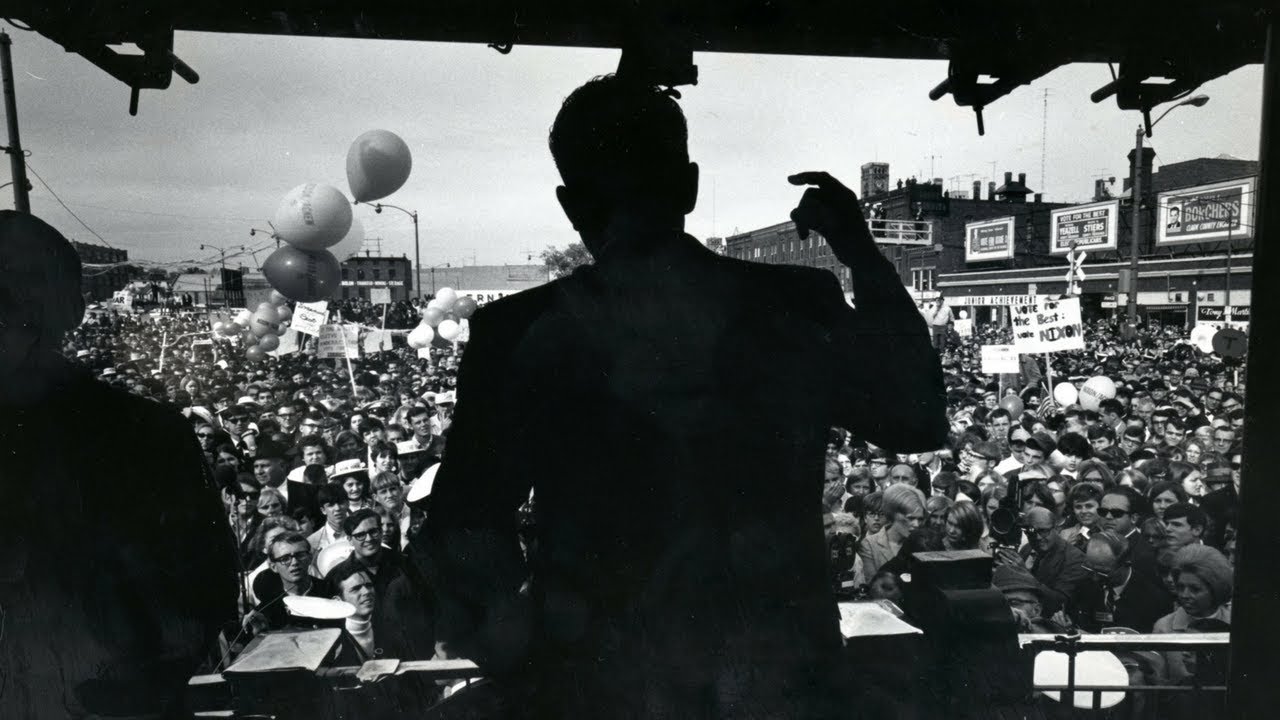
Patrick J. Buchanan: '1968: The Year The Silent Majority Was Born'

Source:Richard Nixon Foundation talking to Patrick J. Buchanan, about his book about Richard Nixon.
Source:The New Democrat

"Pat Buchanan recalls the tumultuous year of 1968 and Richard Nixon's remarkable comeback to win the presidential election." 

From the Richard Nixon Foundation

I believe you have to understand the 1960s and 1967-68 especially to understand the great political comeback of Richard Nixon and the rebirth of the Republican Party. Once you know what this time was and what it was about and how it benefited Richard Nixon, you'll also understand how brilliant of a politician and political strategist that Nixon really was. 

Richard Nixon is in the same class as Lyndon Johnson, Ronald Reagan, Bill Clinton, Franklin Roosevelt, when it comes to great politicians in American history. Perhaps smarter than all of then including FDR and Bill Clinton.

Where I agree with Pat Buchanan is that in 1967-68 America did feel like it was falling apart. The whole country seemed like it was pissed off. Riots and protests all across the country. Dr. King's nonviolent civil rights movement seemed to be going out-of-style, even within the African-American community with the rise of the militant socialist Black Panthers. 

In 1968, millions of Baby Boomers of all races and ethnicities coming of age in the 1960s and seeing an America they didn't want and stood up to demand change across the country. People who tended to agree with Dr. King on the issues that his movement was addressing, but were primarily campaigning against the Vietnam War and what they saw was a self and racist American capitalist economic system.

By the time we get to 1968 the late 1950s is only ten years before 68 and yet America was and looked completely different as a country and not just because of color TV, but the music was not recognizable from the 1950s, the movies and the language and culture in the movies was completely different. Protesting and especially rioting in the streets and doing it in big cities like Detroit, Washington, Chicago, Los Angeles, just wasn't done in 1957 or at any point in the 1950s for the very most part. But you also didn't have a huge generation of angry Americans ( the Baby Boom Generation ) who were angry and wanted a different country and different system.

And during this whole period in the 1960s, you had one political party in charge in America and in most of the country. Similar to what we have today, but with large majorities in Congress. A Senate with 64 Democrats in 67-68, 243 or Democrats in the House, a Progressive Democrat as President in Lyndon Johnson. 

But also in 1968, we had an angry Baby Boomers of all racial, ethnic, economic, and cultural backgrounds and the angry African-American community for good reasons, you also had the parents and grandparents of the Baby Boomers who were also angry, but they weren't angry at America. Just the leadership and party in power, as well as the new Counter Culture that seemed to be taking over America.

What we would call Reagan Democrats in the 1980s and today, we're Nixon Democrats in the 1960s and 1970s. Southern and Midwestern Democrats who voted Democratic most of their lives until 1966, 67, and 68 came around when they were looking for different political leadership. 

Back in 1968, the Republican Party even with their big gains during the 1966 Congressional midterms when they won 45 seats in the House and 4 in the Senate, was still primarily a Northeastern party, with some support in the Midwest and conservative-libertarian West.

And to get to why Richard Nixon was such a brilliant not just politician but political strategist which is just as important, Nixon understood that for the Republican Party to come back they were going to have to make gains in the Democratic Dixie South, while holding their ground in the Northeast, Midwest, and Mountain West, they were going to have to win over right-wing Southern Dixiecrats who opposed the civil rights movement of the 1950s and 1960s and the Cultural Revolution of the 1960s.

Not just the Nixon comeback, but the Republican comeback, started in 1966 with Congressional Republicans winning back over 40 seats in the House and a lot of them in the South and winning back 4 seats in the Senate, allowing Congressional Republicans along with Dixiecrat Democrats, to block partisan, Democratic legislation, that was proposed by President Johnson and the Congressional Democratic Leadership. 

And in 1968, thanks to the Vietnam War and the socialist New-Left that emerged in the Democratic Party, the Democratic Party was a huge house that was hugely divided and their grand political coalition that kept them in power since the Hoover Administration in the late 1920s when they won Congress back, finally broke.

With Richard Nixon again being the great politician and political strategist that he was being there to take advantage of all this political and cultural chaos that was going on in the country. Richard Nixon is a big reason why the Republican Party is southern and rural based in America. He's also a reason why Republicans struggle to win in big cities and big metro areas, because they're base is so dependent on right-wing Fat-Right in many cases Southern Anglo-Saxon Protestant aging men. 

But pre-1966, the Republican Party simply wasn't big enough to compete nationally with the Democrats and Richard Nixon changed that.

Saturday, March 28, 2015

PBS: David Frost-Richard Nixon Interviews

Source:PBS-

Source:The New Democrat

As far as messing around with other people’s elections, that is something that the United States shouldn’t be involved with. If that kind of thing happened here and you could make a strong case that it did in 1996 with President Bill Clinton’s reelection from the People’s Republic of China, we would be freaking out in America over that and did. Congress actually investigated that election both in the House and Senate in 1997. Let other countries elect their own people and then make the best of it as far as how you relate with them. In defending your own interests and standing up for human rights in other countries. That is how you build up credibility with other countries and their people.

As far as Vice President Spiro Agnew, it always brings a big smile to my face every time I hear that. And not because a fellow Marylander made it to the Vice Presidency of the United States. But how would someone of a Spiro Agnew’s limited experience in and out of government makes it that far in this country. One thing you can say about the Richard Nixon White House and before that their political campaigns that ran Dick Nixon’s 1968 and 72 presidential campaigns, is that they didn’t do their homework on their own people. Spiro was already suspected of being corrupt when he was Governor of Maryland in the mid and late 1960s. You can see why President Nixon didn’t give his Vice President a lot of work and didn’t keep him very busy. Because he wasn’t very impressed with him and didn’t see him as much of an asset.

President Nixon was investigated for more than just Watergate in Congress, when the House of Representatives looked into his financial affairs as President in 1974. They reported that the President owed taxes to the IRS that he by law of course was obligated to pay back. But a lot of people owe back taxes that they haven’t paid back. And in most cases they’ve put that off because they can’t afford those taxes because they’ve run up debt. And are looking to put their tax payments off. I’m sure President Nixon had the money to pay his taxes assuming that the only income he earned while as President was his presidential salary. So I don’t know why he had back taxes to begin with.

Sunday, February 1, 2015

Henry Higgins: Who Was Richard Nixon?


Source:The New Democrat

With all due respect to BBC, I don’t think you can explain who was Richard Nixon in under an hour. To explain someone as the narrator in this film said is one of if not the most fascinating American politicians whose ever lived, you probably need a mini-series. A three or four-hour film. If you try to cover Nixon and just focus on Watergate or the criminal conspiracies inside of the Nixon White House, or the checkers speech, the House Un-American Activities Committee, you’ll only get part of his life story and not even half of that. And to cover those things alone, you would probably need three hours to do that.

And for the admirers of Dick Nixon and people from the outside looking in who are simply interested in learning about the man, focusing on his rags to riches story and being born in the valley and rising to the top of the mountain, to paraphrase President Nixon, again you would need probably weeks of reading and watching films about the man. Nixon’s public service career goes from World War II in the early 1940s serving in that war, all the way up to leaving the White House in 1974. With Congress, the Vice Presidency, his role of the GOP comeback of 1966 and 68 and even winning the Presidency in 1968 in between.

You could read series of books and watch series of documentaries about the man’s foreign policy accomplishments including ending the Vietnam War alone. Or his push to move America off of foreign oil with a national energy policy in 1973. His push to reform Welfare in 1969 that became Welfare to Work in 1996. His push to reform American health care and health insurance in 1974, that became the 2010 Affordable Care Act. Even if you watch this entire film about Dick Nixon, again you may get part of his story, but ending it with so much more to learn about the man

Thursday, October 9, 2014

Max Power: The Kitchen Debate: Richard Nixon vs. Nikita Khrushchev

Source:The FreeState

The friendly TV debate that then United States Vice President Richard Nixon had with then Soviet Union President Nikita Khrushchev, was entertaining and important to the extent, that at least America and Europe could see some of the differences between the superpowers. That America wasn’t just a Superpower when it came to our military and diplomatic power. But we were an economic power as well. And that Russia was basically a third world nation, behind the rest of the Developed World in a lot of areas. 

That Russia's living standards were much lower than Europe, Canada and America. And this had to do with the fact that Russia was a communist state and America is a liberal democracy. The main reason why America, Canada, Europe and Japan were so far ahead of Russia during the Cold War and now, has to do with the fact, that we are free. We are all democracies economically and socially. We all have plenty of freedom to live our own lives. 
And in America especially where Europe tends to be more generous with their safety nets, Americans tend to be held responsible with the decisions that we make in life. Wheres the Soviet Union, most of the power in the country was centralized with the State. They were held with most of the authority to govern the country and responsible for looking after their people. Providing them with jobs, education, healthcare etc.

Vice President Nixon did an effective job in this debate of laying out some of the differences between America and Russia and where we were ahead of them and with space. Where Russia was ahead of us, which we turned around in the 1960s and debates like this are important. Especially if they are done in a respectful way.

Friday, August 29, 2014

PBS: American Experience, Richard Nixon: The 1962 Press Conference


Source:The New Democrat

Since graduating from college in I believe 1935, Richard Nixon had been a winner his entire professional career up until 1960 when he lost that presidential election to John Kennedy. So he was going through a very difficult stage in his life that lasted from losing that election until probably as late as 1966 when he had a lost of success in 1966 campaigning for Congressional Republicans. Even though by 1963 he went back into the private sector as a New York lawyer and public speaker. But politics is what made him very happy.

Because of all these things and the mounting frustration that had built up of not only being out of public office for the first time since 1946 when he left the Vice Presidency in early 1961 and losing his second major election in 1962 in just two-years, Nixon just sort of went off and took his frustrations out on the press and let them have it. Calling this press conference his last, which of course it wasn't. I just don't think he put a lot of thought into what he was going to say here and went off instead.

Thursday, August 28, 2014

Investigating Power: Mike Wallace: A Friendship With Richard Nixon


Source:The New Democrat

What I get from this interview of Mike Wallace is that he liked Richard Nixon because he was impressed by the man's intelligence and knowledge. That they could talk about a wide range of issues and that he would learn things from Nixon that he didn't know before. That Nixon was intelligently interesting and was someone you want to talk to and to get to know. This is not even a five minute video, but if that is what Mike Wallace likes about you, you should take that and be happy. Because Wallace I believe is the best news interviewer of all-time because of his own intelligence about a wide range of issues and his preparation and ability to interview anybody about anything.

Wednesday, August 27, 2014

NBC News: Meet The Press- U.S. Vice President Richard Nixon (1960)

Source:NBC News- U.S. Vice President Richard Nixon (Democrat, California) on NBC News's Meet The Press in 1960.

Source:The New Democrat 

"Vice President Richard Nixon appears on Meet the Press on September 11, 1960" 

From NBC News 

Vice President Richard Nixon trying to make the point that America was still stronger than Communist Russia at this point across the board. This was one of the biggest issues of the 1960 presidential campaign between Vice President Nixon and Senator John F. Kennedy: was America moving forward and advancing and at its strongest point possible to take on Russia if it needed too. 

The Vice President seemed to believe that America was, but that we could always do better. Senator Kennedy constantly making the point that America stagnated especially economically with the recession of the late 1950s and early 1960s and that we needed to get moving again.

Monday, August 25, 2014

David Von Pein: Richard Nixon on the Jack Paar Show (1963)


Source:The New Democrat

Richard Nixon actually showing a human side of him. A likable funny side that if he showed more people in public and in private, especially with his taping system, instead of coming off as a mean old, well dick (pun intended) he would've been more popular in public and in the media and would've had an easier time politically. And would've gotten more positive attention for his laundry list of accomplishments and Watergate probably never happens, let alone needed to be covered up, or brought out in the open. Because he would've ended up liking and trusting more people with the same feelings towards him from others.

Wednesday, August 20, 2014

CBS News: Face The Nation- Richard Nixon October 27th, 1968


Source:CBS News.

Source:The New Democrat

Politically and ideologically Richard Nixon would be called what we call a Northeastern Republican today at least on social issues and even as it related to the safety net. He wasn't against the safety net, but didn't want it running people's lives for them and believe mentally and able body people who could work should be required to work. Even though he was from California and lived there, or at least had a home there his whole life he was ideologically very similar to a New York or New England Republican on those issues.

People like to call Dick Nixon a Centrist or perhaps even a Progressive or Liberal today. But the fact was he wasn't crazy about big government in our economic or personal lives. (Unless he felt it benefited him politically, IE Watergate and other snooping operations) He was a true Federalist when it came to economic issues and the safety net at least. Believed in a strong national defense and was a Conservative Internationalist on foreign policy. Law and order, I mean he had serious traditional Conservative Republican leanings, but wasn't as far to the Right as the Tea Party or even Ronald Reagan.
Source:CBS News

Wednesday, August 29, 2012

EFAN 2011: Richard Nixon's- 1968 GOP Presidential Acceptance Speech: The Silent Majority

Source:EFAN- Richard Nixon, accepting the Republican Party's 1968 nomination for President.
"Here is Nixon's Acceptance Speech from the 68 RNC. He was the man to beat in 68...

I also have radio coverage of the roll call that I will upload here in a bit."

From EFAN

The 1960s was actually a pretty good time for America even though we were very divided as a country over Vietnam, civil rights and the Great Society. 

The Civil Rights Act was passed in 1964 which outlawed racial discrimination under law in the United States. 

The Voting Rights Act was passed in 1965. Which meant no longer would be people be denied their right to vote based on their race. 

The Fair Housing Law was passed in 1968. Which meant no longer would people be allowed to deny other people housing based on race. 

Medicare was passed in 1965, which meant seniors would always have guaranteed health insurance in America.

The economy boomed in the 1960s. The Federal Government was actually able to balanced its budget during this decade. 

But the 1960s was also one of the most turbulent and divisive decades we've ever had in America. Four political leaders were assassinated in this decade: President Kennedy, Malcolm X, Rev. Dr. Martin L. King and of course Senator Robert Kennedy in 1968. King and Kennedy in 68, within two months, April and June. Hundreds of thousands of Americans dying or injured in the Vietnam War, the South moving from solidly Democratic to solidly Republican in 1968.

Richard Nixon understood the mood of America about as well as any politician we've ever produced. And understood where the country was and where they were going and how he could fit in that into his politics as far as what he believed and what he wanted to accomplish. And he could make that work politically for him and the Republican Party. This whole speech is a perfect example of that, where he says: "That a country thats run by the rule of law, has lawlessness throughout the country." He's talking about the riots in our big cities like Detroit, Chicago, Los Angeles, and others.

Richard Nixon also said in 1968: "When the a country with the greatest military in the world gets bogged down in a civil war in a third world country (he's talking about the Vietnam War) when these things happen its time for a change in leadership in the greatest country in the world." Meaning the United States. 

Dick Nixon laid out where the country was, all the divisiveness that the country was going through. And what wasn't working in the country and saying it's time for a change in leadership in America. And saying he's the one meaning who will bring that new leadership that will move America forward.

Thursday, July 19, 2012

Conrad Black: The Invincible Quest- Richard Nixon Biography


Source:Thrift Books- Conrad Black's book about Richard Nixon.

"The Invincible Quest is an authoritative biography of one of the most accomplished and controversial leaders of the twentieth century. Beginning with Richard Nixon's birth to Quaker parents in 1913 and ending with his death in 1994, Conrad Black traces Nixon's career, assessing both his achievements and the evolution of popular and historical thinking about him since his death. Drawing on recently opened tapes and documents, and on Black's personal interviews with many of the major players in Nixon's administration, The Invincible Quest reveals a new side of Nixon: a man who didn't have the advantage of charisma but was surprisingly self-assured and effective; a man dogged by political scandal yet seemingly unstoppable. Opinionated, balanced, and perceptive, The Invincible Quest makes a significant contribution to re-evaluating the idiosyncratic president's entire, eventful career." 

From Thrift Books 

"Conrad Black, currently appearing in a Chicago court on fraud charges, is also a highly respected biographer. "The Invincible Quest: The Life of Richard Milhouse Nixon" is the most thorough biography ever written about America's most controversial President." 

Source:Craig Rintoul- Conrad Black's book about Richard Nixon.

From Craig Rintoul

Richard Nixon, lived such a long, complicated and productive life, with a lot of ups and downs, that writing one book about him, doesn't do him justice. Or the people justice who are interested in learning about him. Every time a new documentary, movie or book about Dick Nixon comes out, I at least look into them and a lot of times get a copy of them for myself. I have a few books about him and several documentaries about him as well.

Richard Nixon was a man that came from a loving home, but from basically nothing in Whittier, California, yet he ends up graduating from law school, having a good military record, Duke University, U.S. Representative by 33 in 1946 and famous in the House as a freshmen. U.S. Senator by 37, Vice Presidential nominee for Dwight Eisenhower in 1952 at 39. Vice President of the United States by 40, reelected Vice President in 1956. The first influential and important Vice President that Americans were actually familiar with. Republican nominee for President in 1960 at age 47, comes within 100,000 votes and Dick Daily in Chicago and LBJ in Texas of being elected President in 1960. Law partner in a major law firm after the Vice Presidency in the 1960s and Republicans turning to him to run for President in 1967-68, after what he did for Congressional Republicans in 1966.

All of the chapters that I've mentioned about Dick Nixon's life, all are worth a book about them and his life. Nixon's life wasn't just about ups and downs and hot and cold, but about one of the most important figures that we've ever had in American history. His foreign policy dealing with our opponents so we can influence them and their people, instead of ignoring them. Like with Russia and China and was 15-20 years ahead of its time and considered mainstream today. Another fascinating thing about Dick Nixon, was it was his politics that would put him on the progressive wing of the Republican Party (yes, there's such a thing) both on economic and even foreign policy, as well as some social issues. Yet he's loved by the Populist-Right and the Christian-Right of the Republican Party.

It's not just foreign policy where Dick Nixon as President was ahead of him time, but economic policy as well. Welfare to Work over twenty years ahead of its time. The Affordable Care Act gets a lot of its roots from the Nixon health care bill in 1974. President Nixon was pushing energy independence in 1973 well before it became popular.  

It's hard to box Richard Nixon in. If you are going to try to write a bio about Richard Nixon, first you should try to get the whole story. Instead of trying to write the Defense of Richard Nixon or a hatchet job, which a lot of books about him are. And then if you want to write he whole story about Nixon, you should write a series about him. Otherwise you are looking at writing thousands and thousands of pages into one book, assuming you do an accurate job.

Sunday, October 2, 2011

Battle Cry For Freedom: Richard Nixon- 'On Democratic Failures in Leadership'

Source:Battle Cry For Freedom- from a 1968 Richard Nixon for President campaign ad.
"Nixon on Liberal Failures in Leadership - 1968 Election Ad. Nixon 1968 Presidential election campaign ad." 

From Battle Cry For Freedom

If there was ever a perfect time for someone to run for President of the United States and I guess I would add Ronald Reagan in 1980 to that list, but the person I'm thinking of would be Richard Nixon in 1968. 

1968 is one of the most divisive years at least in the 20th Century. America seemed to be going through both politically as well as a Cultural Revolution in the 1960s. The Democratic Party had all of the power in the Federal Government for eight of the first nine years. And there was this feeling that America was sort of coming apart.

Whether that was true or not and Richard Nixon, who had been running for president at least since 1965 after sitting out in 1964, sensed this being the great politician that he was, President Lyndon Johnson was very unpopular especially with the Vietnam War. 

The Hippie Revolution was going on and there was this feeling with Conservatives and perhaps Independents as well, that liberalism at least social liberalism had gone too far. I disagree with that as a Liberal, but that was the feeling from Conservatives. With the civil rights laws, anti-war movement and the Hippie Revolution of that decade as well. And there was this feeling that America needed a change a new direction and Dick Nixon picked up on this.

Dick Nixon had already paid his dues with the Republican Party. (So to speak) He was already a known name in the party, serving in Congress from 1947-53, Vice President from 1953-61, and losing one of the closest presidential elections in American history to Jack Kennedy in 1960. 

Nixon was smart enough not to run for president in 1964 where Senator Barry Goldwater lost in a landslide to President Johnson. But Senator Goldwater did manage to win some conservative Southern states in that election. That the Democratic Party used to own which also helped set up Dick Nixon's 1968 presidential campaign.

Nixon also campaigned for Congressional Republicans in the 1966 mid-term elections where the Republican Party picked up around forty seats in the House and four in the Senate. The Democratic Party still had large majority's in the House and Senate, but these gains also helped set up the 1968 campaign for the Republican Party, which made Nixon look like the clear frontrunner in the Republican Party in 1968, because a lot of Republican politicians owed Nixon favors. 

Dick Nixon saw that America was divided and that he would be candidate to try to unite the country. Or at least unite part of the country behind him and the Republican Party. The people who he called the Silent Majority the people who weren't part of the Hippie Revolution or the anti-war movement. And 1964 and 68 was the start of the Republican Party taking over the South and winning more offices. Where over forty years later they basically own that region politically.